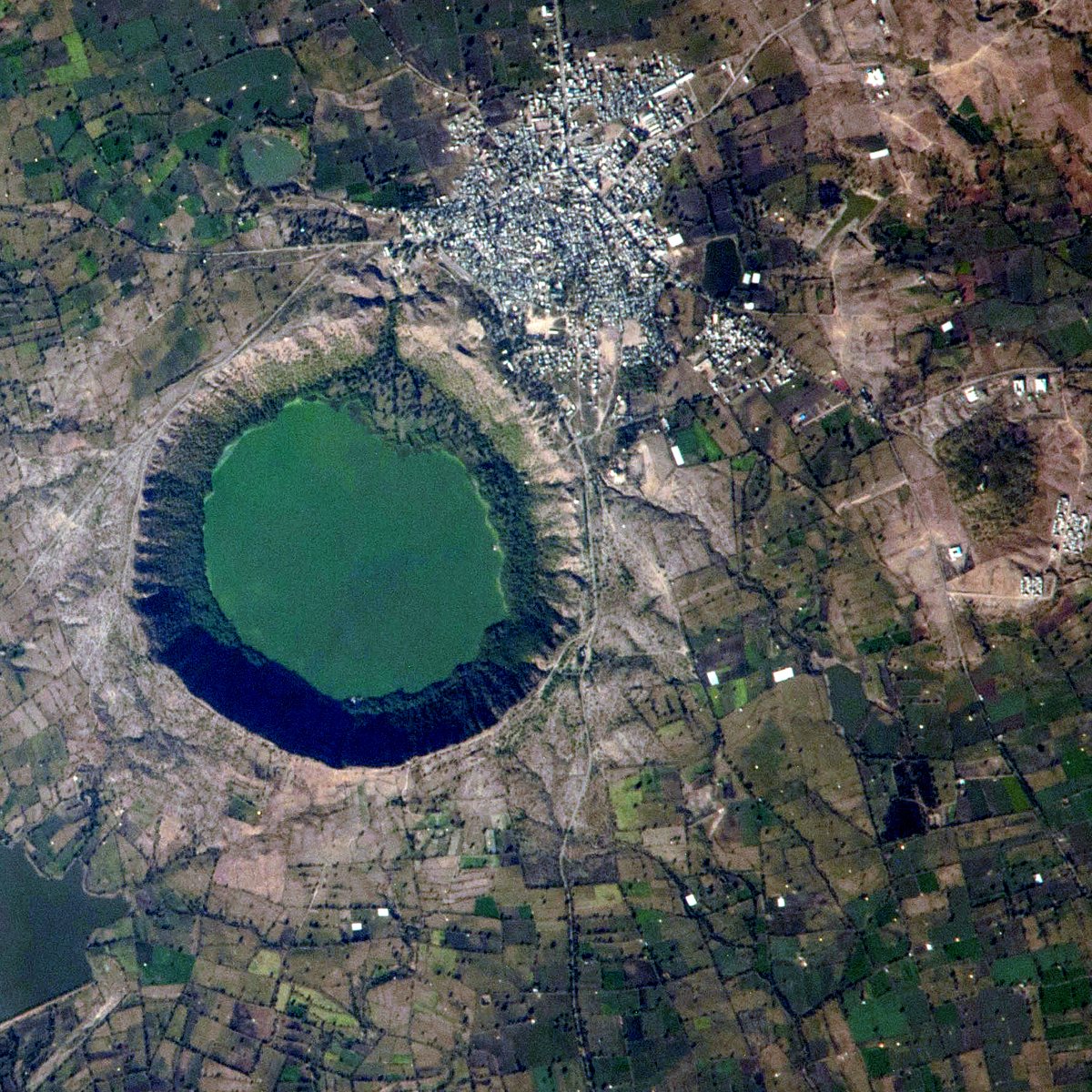
Travelling to the Lonar crater was difficult because there is no railway connection to this place. From the nearest station it is three hours by bus. It is a real Indian settlement, where every child points a finger or waves a hand as a sign of greeting. This attention very quickly becomes tiring, but the goal justified the means. In the middle of a plain there is an almost perfectly round crater. It is of no interest to the local residents, and peacocks graze in the nearby trees.
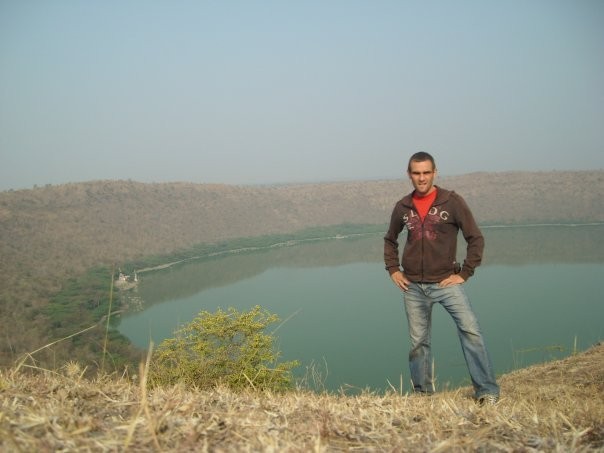
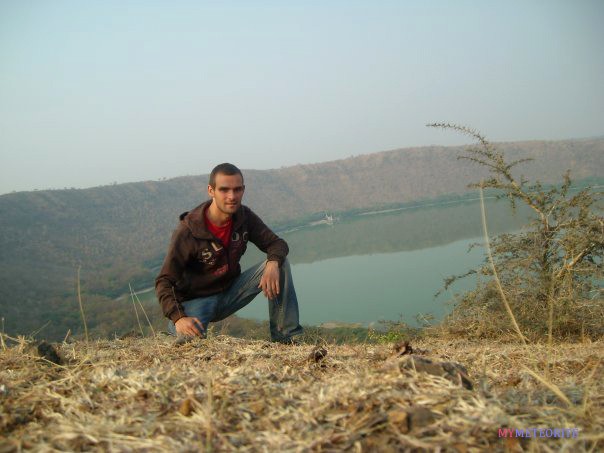
Despite the rotten smell of the salty water (density 10.7 g/l), it was very interesting to explore this place. We did not have to search for meteorite remains: it was explained to me that some time ago everything here had been surveyed very carefully by NASA representatives, and the holes in the stones reminded of their scientific searches. The holes were made with special drills to extract samples of the local rocks for further study in the laboratory. The upper rim of the crater has been carefully surveyed, with more than 100 holes in total.
Around the lake there are pieces of temples built at different times, and all these facts speak of the religious attitude of local residents to this place. It was not possible to find out the exact time of construction. In the north-eastern part of the crater there is a working temple. Through it, or from under it, a stream of fresh water flows into the crater. It provides the lake and the surrounding plants with moisture, being a kind of source of life and creating a microcosm within the limited diameter of the crater. I am sure that in December, without this stream, the crater would present scientists with many new discoveries, while at the same time remaining a lifeless space. Thanks to the stream, the bottom of the lake remains a riddle for researchers, and it cannot be explored without special equipment.
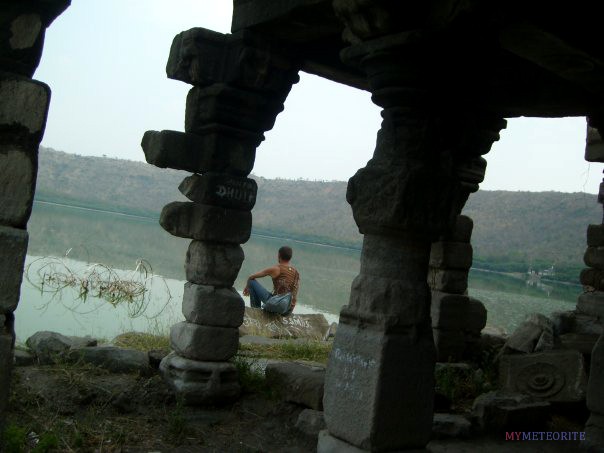
Even to an ordinary person this place seemed mystical and mysterious. Delight alternated with fright at every rustle, and afterwards it took time to come to my senses. Local residents gave us ironic looks. It seemed to me that they know a little more about this place, but here you cannot meet many English-speaking Indians. The expedition to the crater gave answers to many of my questions, but when I left, new questions appeared again.
I miss this time and the story of my transformation. It was the most intense and fastest period of my life.